
Masatsune Kainosho
March 10, 1942 – December 28, 2025
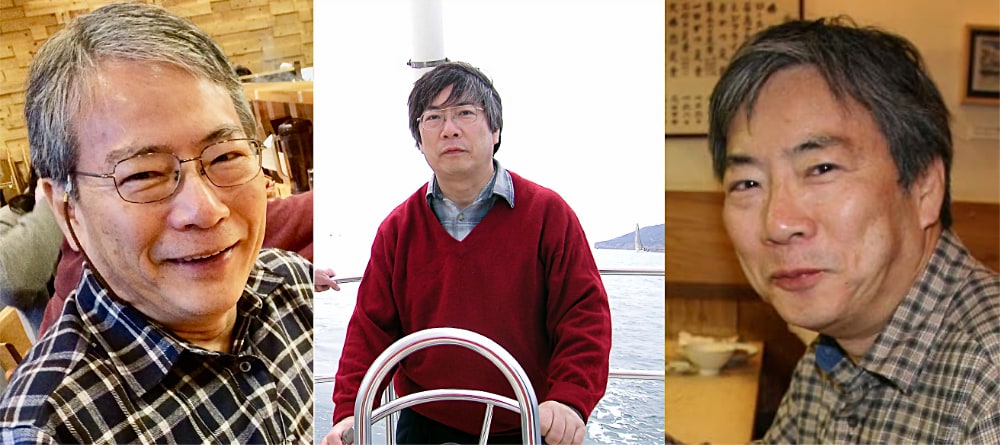
Masatsune Kainosho, known as Kai to his friends and colleagues, passed away suddenly due to a cerebral hemorrhage on December 28, 2025. Kai was a charming and friendly person who made profound contributions to biomolecular NMR. Kai’s passing was too sudden and too early, which led to a huge wave of shock across our scientific community.
Kai was a pioneer and an international leader in the development of isotope labeling technologies for application in biomolecular NMR. Building on his training as an organic chemist, Kai developed methods for both uniform and stereospecific deuteration of lipids, amino acids, and nucleic acids for simplification and assignment of NMR spectra. In the early 1980s, Kai was already publishing papers on 13C labeling of a protein called Streptomyces Subtilisin Inhibitor (SSI), in an era where homonuclear proton NMR was the primary tool for studies of proteins. He demonstrated the power of isotope-labeling techniques by capturing various internal motions of bulky amino acids such as methionine, phenylalanine, and tryptophan in proteins. In a pioneering contribution in 1982, he introduced the novel concept of making sequence specific assignments in protein spectra on the basis of the scalar coupling between 13CO and the amide 15N resonance of the next amino acid in the protein sequence. This pioneering work formed the conceptual basis for the later development of methods for sequence specific assignment of the 3D spectra of uniformly 15N, 13C labeled proteins by scalar magnetization transfer through the peptide bond.
Kai persistently pushed the isotope-aided NMR technology to study larger proteins. In a major advance, Kai introduced stereo-array isotope labeling (SAIL) in early 2000. In this innovative and sophisticated technology, amino acids are chemically and enzymatically synthesized with an optimal stereospecific and regiospecific pattern of stable isotopes and incorporated into proteins using cell-free expression technologies. SAIL overcomes problems arising from broad and overlapping resonances and opens the way to NMR structural studies of large soluble proteins and membrane proteins. The SAIL amino acids preserve the 13C–13C and 13C–15N connectivities to facilitate TROSY-based resonance assignments. This was a remarkable achievement in the field and the paper entitled “Optimal isotope labelling for protein structure determinations” was published in Nature in 2006. To enhance access to SAIL technology world-wide, Kai founded a company to synthesize and distribute these valuable SAIL labeled amino acids. Kai also collaborated with many international scientists, who were interested in using his technology to answer specific scientific questions. His worldwide collaborations are testimony to his personality and philosophy – “no borders in science”. Kai was invited to speak at numerous conferences and meetings across the globe and he valued and truly enjoyed interactions with scientists from all over the world. Kai was truly an international scholar.
Kai was born in Yokohama, Japan in 1942. He received a B.Sc. in 1964 and Ph.D. in 1970 from Tokyo Metropolitan University (TMU). After graduation, Kai worked as a researcher at Ajinomoto Co. Ltd. from 1964 to 1980. Ajinomoto is famous for producing glutamic acid (“umami” component) and many other amino acids, and Kai became familiar with fermentation technology and amino acid synthesis during this period. In 1973, Kai received an opportunity to go abroad for sabbatical and worked in the laboratory of Professor Sunney Chan at Caltech, where he studied lipid dynamics using NMR. In 1980, Kai was appointed as an Associate Professor at TMU and subsequently became a Full Professor in 1992. He retired from TMU in 2005. After his retirement, Kai continued to be very active in research: he was appointed as ‘Specially Appointed’ Professor at Nagoya University (2006–2007) and at TMU (2007–2008) where he conducted many seminal studies using his SAIL technology. Through his long-time isotope research, Kai founded the SAIL Technology Inc. in 2004, initially serving as Scientific Director and later as a Scientific Advisor. Kai was also a Visiting Professor at Purdue University, University of Wisconsin–Madison, and J. W. Goethe University. Kai’s contributions to the biological NMR community are exceptional: he organized many meetings including ICMRBS in 1988 in Tokyo and again in 2016 in Kyoto, as well as Asia-Pacific NMR Symposia over two decades. Kai was a recipient of The Chemical Society of Japan Award in 2007, was named an Honorary Member of the NMR Society of Japan in 2010 and was elected as an ISMAR Fellow in 2008. Kai played a long-standing leadership role in the Japanese NMR community, and his loss was huge and shocking to many of our friends and colleagues in Japan. His entire 61-year professional career was dedicated to science, and especially to the field of biomolecular NMR.
Kai is survived by his beloved wife Mitsue, his daughter Akiko and her husband Susumu, and his younger sister Teiko. He will be forever cherished by his grandchildren Kisuke and Keita. Kai was truly a family-oriented person - his marriage with Mitsue lasted over 50 years and Kai was frequently accompanied by Mitsue at international conferences and meetings. We enjoyed so many occasions with Kai and Mitsue at a dinner table, and we cannot forget wonderful memories with him and his big smile over great meals! Kai was an enthusiastic food lover and enjoyed exploring many international, sometimes exotic cuisines whenever and wherever he had a chance.
Kai’s passing is a profound loss to science and to his many friends and collaborators. He will be remembered for his passion and joy for science and as a warm, generous and patient man, who was greatly respected and admired by his colleagues and friends. Kai was a dear friend to us, the authors, and to many in the biomolecular NMR community. He will be sorely missed.
Peter E. Wrighta and Mitsuhiko Ikurab
aDepartment of Integrative Structural and Computational Biology, The Scripps Research Institute, La Jolla, CA92037.
bPrincess Margaret Cancer Centre, University Health Network and Department of Medical Biophysics, University of Toronto, Toronto, Canada.